Stormrider!

Showing posts with label genre. Show all posts

Tuesday, February 26, 2013

Writing & Reading - Two Sides Of a Coin


It’s easy to talk about craft and grammar and spelling and all the little how-tos and don’t-dos when thinking about and discussing writing. And it’s easy to skip over the more simple things a writer needs to keep in mind or do or both. The more general concepts you kind of have to get into your head and keep there. 


I’ve said it before and I’ll say it again. A writer has to read and write – a lot. You have to love it. You have to pretty much think about it when you’re not doing it. You must do both. The more you write the better you write. The more you read the better you write. If you read some bad writing it’s a great lesson in what not to do. Great writing gives you great tips on what you should do. Quite simply they go hand in hand. If you don’t have time to read then forget the writing. 
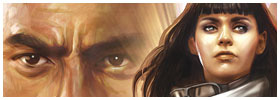

Legacy – Prisoner of the Floating World 1
And speaking of the writing, presuming you do write, then you really need to make a habit of writing if you want to make it a success. Write every day (well not EVERY day, you can take a vacation though I frequently find myself jotting notes on vacation and I know my niece, CorinnaBechko, a writer of comic books and her husband Gabriel Hardman writer and illustrator work out plots while on road trips).


In any event, create a schedule that works for you and stick to it. If you love to write in the depths of the night, do that. If you’re a parent and need to write when the kids are asleep or at school, then do that. But whatever time you choose I highly recommend you create a goal, how many words and/or how many hours you’re going to work uninterrupted and stick to it. Seriously, do it every day (well except for that vacation…maybe).


Now here’s a controversial thought, a sort of an overview. Do you as a writer need writing courses or seminars or workshops?  The real answer is I don’t know. I don’t, never have.


Everyone is different and here are some things to think about. Is a classroom really a place for serious writing? You can’t close a door and write uninterrupted. You are probably writing something you’ve been told to write or on a subject or in a genre you’ve been instructed to write in. It isn’t coming from YOU. 


Also, do you really need a degree to tell you you’re a writer? Or a name tag from a well-known retreat or workshop? If you write you’re a writer; that’s all she wrote! 


The good things about writer’s workshops, conferences, etc, is being with like-minded people. Folks who don’t think you’re mildly insane for your desire to write books. 


And taking classes to understand grammar and get your spelling brushed up isn’t a bad idea if you’re rusty or just never learned much in the school system.

There are some written courses I’ve seen that have some value, give some good instructional tips, web links to good sites, but those are a separate issue from the collective workshops, conferences and attending in person writing classes.  


All in all I’d have to say I’m not big on those. They usually cost a lot of money, eat up a whole bunch of time and critiques I’ve seen aren’t generally to the point, perhaps for fear of hurting someone’s feelings. 

So I’d say know your language so you can know  what rules you’re breaking and focus in on you and your writing and a space, whether large or small where you can be alone with it and write.

Tuesday, May 1, 2012

Oh, Horrors! Writing for the Horror Genre

I'll be the first to admit that I'm not a horror writer though I've given thought to pursuing that line.  Nonetheless, I know a bit about it and as a professional writer I know a lot about that.  So I decided to ponder the genre a bit and discover what thoughts come of it.

First, and sadly, that particular genre is frequently depicted as bloody, violent, gory and disgusting beyond words.  Many people avoid reading in that genre just because of that.  And, while it's true there are some written that are filled with mindless violence, little plot, lots of blood and shock, there are many others that are just oozing with atmosphere, emotion and a great story.

Writing for horror means the writer has to be skilled in many ways as any other writer, developing characters, creating plot twists and snappy dialog in order to create a gripping tale.  And the horror writer goes a step further, taking us by the hand to lead us into the dark unknown. I say dark because that's usually the kind of unknown the horror writer is exploring.

I enjoy reading some horror which is why I'm contemplating writing it.  I enjoy the chills and the anticipation, the twists and the unexpected. Be they ghosts, creatures, slithering things, aliens intent on mayhem, or the great beyond.

So how does a writer get there?  Well, as with all writing we know the reader is willing to suspend disbelief, to enter the world of your creation, but the writer has to give the reader a reason to read.  There has to be a beginning hook of some kind.  The story can begin normally and slowly draw the reader into 'weirdville' or it can start out strange and just accelerate.

Description is exceptionally important while writing horror. It's a great place to practice if you want to send shivers up your readers' spines. I've noticed short passages, written well are the key.  Enough to really get me on edge, then draw back a bit. The writer who's careful not to overdo it, to hit just the right balance is the one who creates the vivid details by tapping into all the senses and alternately picking those most appropriate to the scene.

The writer, no matter what kind of characters he or she creates, be they vampires, werewolves, ghosts or aliens, must create characteristics within them that make them appealing and yes, no matter what, human.  The characters don't always (horror? - maybe hardly ever) have to be likeable, but they do have to be engaging. The reader must have characters that can be identified with.

Check out some of the more recognizable horror authors: Dean Koontz, Robert McCammon, Stephen King, Anne Rice. Notice the charisma they've injected into their characters via appropriate names, appearance, action.  Notice how they've created characters who aren't perfect.  The hero or heroine of the tale often screws up, thinks unkind thoughts or does something 'politically incorrect'.  If the reader can empathize with the character then the character takes on life and breathes.

I've also noted that frequently the main character in a novel has the least amount of description.  This trick allows the reader to imagine themselves in the same situation - no matter their own 'real world' attributes. So keeping it simple seems the best route.

Now I'll mention this because it's so true, for horror or any writing for that matter.  Don't name your characters too close together.  Don't write a story with a "Mary" and a "Marie", a "Mat" and a "Cat", a "Harry" and a "Mary".  Anything which is just to close confuses the reader and a confused reader is not a happy reader.

Hmm, after writing this I may be writing a horror tale soon.  If you're so inclined as well, have at it, Read, a lot, then create your own thing that screams in the dark.

Other Posts Of Interest:

Related Posts Plugin for WordPress, Blogger...